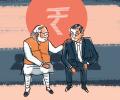
'India's economic fundamentals are much too strong to be affected by his resignation,' says B S Raghavan.

'James Crabtree ignores the emergence of a nexus between business and politics going back to the 1920s and talks of it as a new child of 21st century India,' says Shivanand Kanavi.
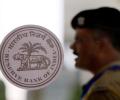
The windfall from RBI may be used to trim borrowing, help fund Rs 3.3 lakh crore capex plan, capitalise banks and provide fiscal stimulus to some stressed sectors, experts and economists said.

With the Jaypee acquisition, the Suraksha group, which made lenders an offer of Rs 7,736 crore, will be able to expand its footprint in north India after making inroads in Mumbai's real estate market over the past year. Sudhir Valia, the promoter, was a co-founder and executive director of India's biggest pharmaceutical firm, Sun Pharmaceuticals, and is a close relative of Dilip Shanghvi.

The BJP's manifesto speaks about the Prime Minister's vision of making 'Atmanirbhar Bihar'.

He was most recently credited as one of the brains behind labour law reforms in Rajasthan

While players in the financial ecosystem are opening up to the idea of receivables funding for the sector, this market needs a regulator, which a Parliament panel feels only RBI can provide.

Government looking at cushioning slowdown due to demonetisation with sops and higher outlay for micro, small and medium enterprises, agriculture, and affordable housing.

'The experience so far is a shocking example of how critical scheme of national importance can be brought into disrepute by inefficient and badly designed implementation,' says Dr Madhav Godbole, the former Union home secretary.
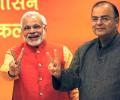
Reduce the government stake in public sector banks to 33 per cent, recommends A K Bhattacharya

French Finance Minister Christine Lagarde on Tuesday became the first woman to head the International Monetary Fund after its executive board chose her over Mexican central bank governor Agustin Carstens.

Chidambaram questioned the Narendra Modi government whether its demonetisation decision was designed to convert black money into white.

Hopefully, the grey world of central banking in a nation hit by demonetisation, will lighten up with some of his notes soon.
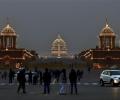
Has the Modi government been more at odds with institutions than other governments? There is no doubt that there have been more run-ins. While the RBI and CBI cases have drawn attention, there have been others, less publicised, Subhomoy Bhattacharjee points out.

In a soon to be published book, 'Of Counsel: The Challenges of the Modi-Jaitley Economy,' former chief economic advisor Arvind Subramanian says though RBI has a good reputation, it does not mean it's always right, as for years, the RBI was unable to grasp the seriousness of the loan repayment problems or identify the prolonged frauds of Nirav Modi and the likes.
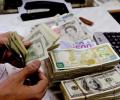
Prime Minister Narendra Modi asked G20 nations to freeze and repatriate unaccounted money hoarded abroad.

The RBI is considering permitting FII and commercial banks to trade on Indian commodity exchanges.

The Budget would have been the perfect vehicle to introduce some bold initiatives.
That opportunity has been lost through this Budget, observes Shreekant Sambrani.

Will Arundhati Bhattacharya be the RBI's first woman governor? Or will Urjit Patel succeed Raghuram Rajanas RBI governor when his term ends on September 4?

'This will have a multiplier effect in generating more jobs.'

The biggest headwind to the consumption story in FY23 is a sharp decline in government subsidies on food, fertiliser and fuel, and overall decline in revenue expenditure net of interest payments. This, analysts say, will adversely impact purchasing power of households at the lower end of the income pyramid, translating into lower spending on consumer goods and services.

A large percentage of total tourism business activity of India, which is estimated at $28 billion+ in forex and upwards of Rs 2 lakh crore in domestic tourism activity will be at economic risk through the year.

The government has been taking steps to promote cashless or digital transactions to take India towards a less-cash economy

Undergraduate courses indicatively cost S$23,000 to S$38,000, while postgraduate courses approximately cost S$15,000 to S$40,000.

What is killing the risk appetite of the bond buyers is the inconsistency in the central bank's approach. It needs to allow the yield to find its own level, gradually. To ensure that, the RBI may adopt a similar approach with which it handles a slipping rupee, asserts Tamal Bandyopadhyay.

Naved Masood, former secretary in the Ministry of Corporate Affairs and Sebi board member; TV Mohandas Pai, chairman of Manipal Global Education and Dinesh Kanabar, CEO, Dhruva Advisors have ceded their position on the NSE board following end of their tenure.
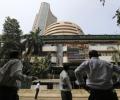
'It is easy to dramatise the events of today, but it is far more important to focus on the fact that we have a radically overvalued financial sector. It is a house of cards.'
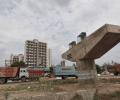
About railways sector, the Survey said that it is facing stiff competition from other modes of transportation and the government is initiating various transformative measures to keep railways on track.

Under the watchful eyes of five wise men, who know the industry well, banks will not find it easy to hoodwink the system, says Tamal Bandyopadhyay.

'All regulatory agencies must be made Constitutional bodies like the Election Commission, the Supreme Court, and the CAG.' 'That way they will become independent of the minister,' recommends T C A Srinivasa-Raghavan.
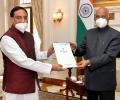
The implementation of the NEP and four-year undergraduate programme were approved by the Standing Committee on Academic Matters and the Academic Council last week.
Some experts says that the high net-worth requirement of Rs 50 crore for setting up an IU is a deterrent.

The verdict, upholding Centre's November 15, 2019, notification bringing personal guarantors of corporate debtors under the net of the IBC, assumes significance in view of the fact that various high-profile industrialists may now face insolvency proceedings along with their debt-ridden firms under the IBC.

''Even without major reforms, with a business as usual scenario, and with current inflation trends, we should be clocking around 11 to 12 per cent nominal growth.' 'That is not happening and is a source of worry,' Rathin Roy tells Arup Roychoudhury.

'Concerns about India's future are hampering private investment.' 'If the private sector sees strategy, teams and execution on these issues, this will inspire confidence in India.' 'This should be our main strategy for 2017,' says Ajay Shah.

In a note to customers, the country's largest lender State Bank of India said, 'Interest shall continue to accrue on the outstanding portion of the term Loan during the moratorium period'. The accrued interest will be collected by the lender in the form of additional EMIs from those borrowers who opt for the three-month moratorium.

In a first, the Comptroller and Auditor General's (CAG) officers reached out to several ministries in the last week of April as part of a confidence-boosting measure. The meeting brought the CAG officials and those from the ministries across the table to discuss the pain points in their relations. CAG of India Girish Chandra Murmu took this novel step because of growing tensions between those audited and the auditor.

'There will be political opposition, and this monetisation will require continued political will.'

The APG released its much-awaited 228-page 'Mutual Evaluation Report' on Saturday, 10 days ahead of the key Financial Action Task Force's plenary meeting which will give its decision on Pakistan's 'grey list' status.

Emerging nations have discussed delinking the quotas from the governance reforms to facilitate its passage.
